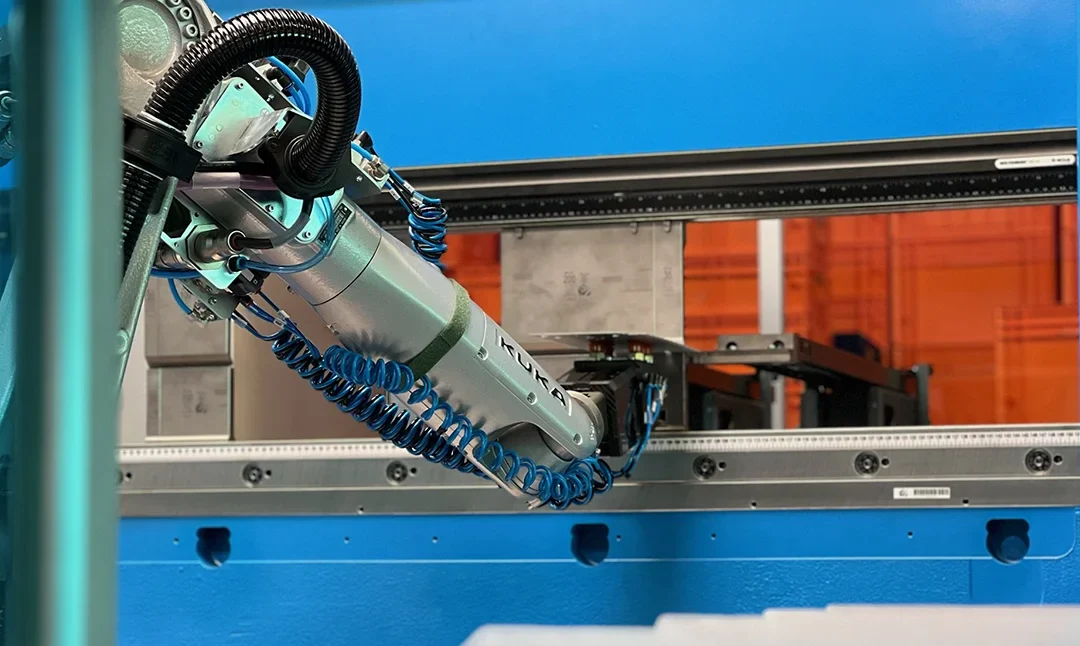
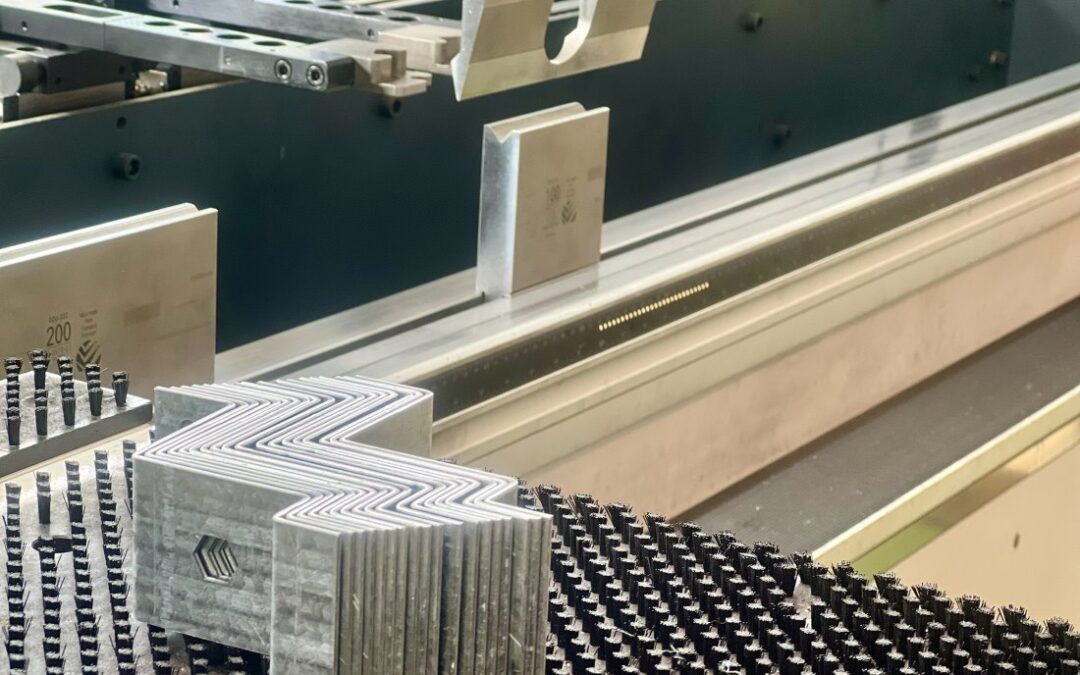
Sheet metal perforation is one of the fundamental processes in modern metalworking, enabling fast, precise, and repeatable production of various shapes from metal sheets. Due to its efficiency, it plays a key role in industries where high-quality mass production is required. Over the decades, the process has undergone significant technological advancements and is now supported by computer-controlled systems that ensure exceptional accuracy and reliability. In practice, it is used to manufacture a wide range of products, from simple metal brackets to complex components.
Basic Process Operation
Sheet metal perforation uses a tool that penetrates the sheet with high force to cut out a specific shape. The key elements are the punch and the die, which together enable a precise cut. During the process, the material is sheared, resulting in an opening or cut-out of the desired shape. A distinctive advantage of this process is its speed, as the cut is performed in a single stroke without gradual material removal.
Technological Development Over Time
The perforation technique evolved alongside industrial progress, particularly during the Industrial Revolution. At that time, the first mechanical machines emerged, increasing productivity. Today, advanced CNC systems are used, enabling automation and digital control of production.
Materials Suitable for Processing
The process is suitable for a wide range of metals. The most commonly used materials include aluminum, stainless steel, copper, as well as mild and galvanized steel sheets. Each material has its own mechanical properties that affect the processing. Softer materials allow easier perforation, while harder ones require greater force and precise tool selection. Choosing the right material is essential for achieving a high-quality final product.
Thickness and Dimensional Capabilities
Modern machines can process sheet metal of various thicknesses, typically ranging from 0.5 mm to 6 mm. They also support larger sheet formats, providing greater flexibility in product design. This capability allows for the production of both small components and larger structural elements. Sheet size and thickness play an important role in selecting the appropriate technology.
Tools and Their Role
Successful sheet metal perforation depends on the use of appropriate tools. Various tool types are available for creating holes, slots, grooves, embossments, countersinks, bridges, threads, and other shapes. Tools must be precisely manufactured and properly maintained, as this directly affects product quality. Modern machines enable quick tool changes, increasing productivity and production flexibility.
CNC Technology and Automation
Technological advancements have introduced CNC systems that allow computer-controlled machine operation. This enables precise positioning and sequencing of operations. Automation reduces the possibility of errors and increases efficiency. It also allows the production of complex shapes that would be difficult to achieve manually.
Fields of Application
Sheet metal perforation is used across numerous industries. In the automotive industry, it is used for manufacturing body parts and structural elements. In electronics, it enables the production of enclosures, device mounts, server cabinets, optical distributors, and optical panels. In architecture and construction, it is used for structural components, perforated garden and balcony railings, planters, and outdoor kitchens. In the production of household appliances, it is used for various metal components. Its versatility makes it indispensable.
Advantages of Sheet Metal Perforation
One of the main advantages of the process is its speed, allowing the production of large quantities in a short time. It also ensures high precision and repeatability, which is crucial for mass production. Costs are relatively low due to efficient material usage. The process also generates minimal waste, contributing to sustainable production.
Step-by-Step Production Process
The process begins with product design, where all necessary shapes and dimensions are defined. This is followed by machine programming, which determines the sequence of operations. After preparing the tools and setting up the machine, the sheet metal is loaded onto the working surface. The machine then performs all required operations. Finally, quality inspection is carried out and any imperfections are removed.
Maintenance and Quality Control
Regular maintenance of machines and tools is essential for smooth operation. Worn tools can cause defects and reduce product quality, so regular inspection and replacement are important. Quality control includes dimensional measurements, edge inspection, and overall product evaluation.
Workplace Safety
Working with punching machines requires strict adherence to safety regulations. Operators must be properly trained and use protective equipment. Machines must be equipped with safety systems to prevent accidents. Regular inspections and maintenance further reduce risks.
Production Optimization
To achieve optimal results, the entire process must be optimized. This includes proper tool selection, machine setup, and efficient material layout. This reduces waste and increases productivity. The use of modern software solutions enables further efficiency improvements.
Comparison with Other Processes
Sheet metal punching is often compared with other machining methods such as laser cutting and milling. Compared to these, perforation is faster and more cost-effective for large production runs. Laser cutting offers higher precision for complex shapes but is slower. The choice of method depends on project requirements.
Common Issues and Solutions
Common issues include sharp edges, dimensional inaccuracies, and tool wear. These can be minimized through regular maintenance and proper machine setup. Testing before mass production is also important to ensure the quality of the final product.
The Role of Planning and Collaboration
Successful project execution requires good collaboration between designers and manufacturers. The design must consider material and technological limitations. Effective communication helps prevent errors and reduce costs. Team collaboration leads to better overall results.
The Future of Sheet Metal Perforation
Technological development continues to bring new opportunities for improving the process. Digitalization, automation, and smart systems increase efficiency. New materials and tools are also expected to enable even more complex products. The industry is increasingly focused on sustainable solutions and reducing environmental impact.
Sheet metal perforation is a key process in modern industry, enabling fast, precise, and cost-effective production. Its versatility and adaptability allow its use across many sectors. As technology advances, its capabilities continue to improve, opening new possibilities for the future.
Do you need precise and reliable sheet metal perforation tailored to your requirements? Choose Flamula Metal – specialists in comprehensive sheet metal processing using state-of-the-art CNC technology, from perforation and laser cutting to bending and assembly. We deliver top quality, fast turnaround times, and customized solutions for industry, architecture, electronics, and construction.