Perforated sheet metal is one of those industrial materials we encounter almost everywhere – yet we rarely consider how precise and technically demanding its production really is. From ventilation systems, filtration units and protective panels to modern façade cladding and decorative interior elements, perforated plates combine technical efficiency with refined aesthetics.
At Flamula Metal, we manufacture perforated components daily for a wide range of industrial and architectural applications. In this article, we explain how the perforation process works and why this type of machining plays a key role in the production of many metal products.
What exactly is sheet metal perforation?
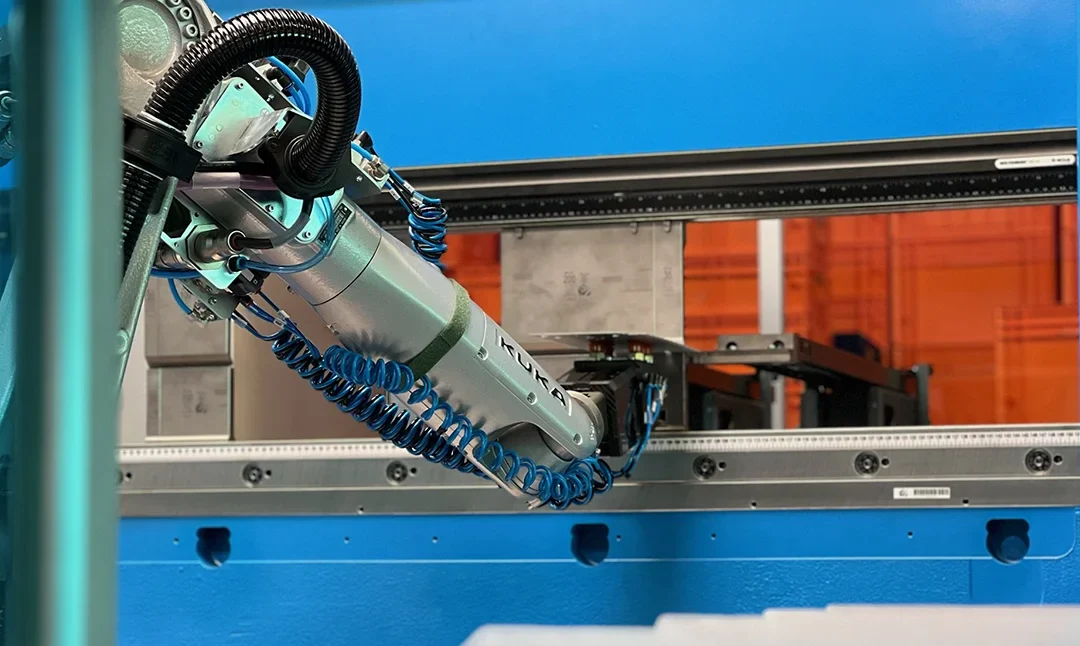
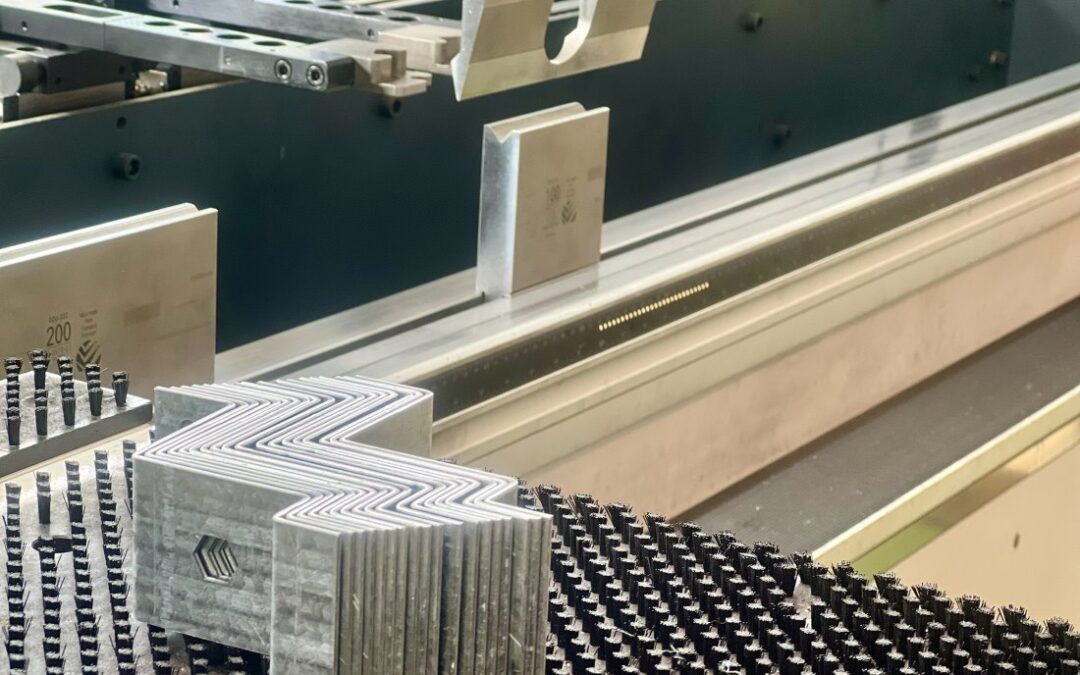
Sheet metal perforation is a process in which automated CNC machines are used to create hole patterns in metal sheets. These patterns can be purely functional (e.g., for airflow or filtration) or highly decorative (e.g., for façade cladding, partition walls or design elements).
Because the CNC machine precisely repositions the tooling, perforations can be produced quickly, consistently and with exceptional accuracy — which is especially important for large production batches or bigger panels.
Where are perforated sheets used?
Perforated sheet metal has an extremely wide range of applications, which is why it is highly valued across many industries. It is most commonly used in:
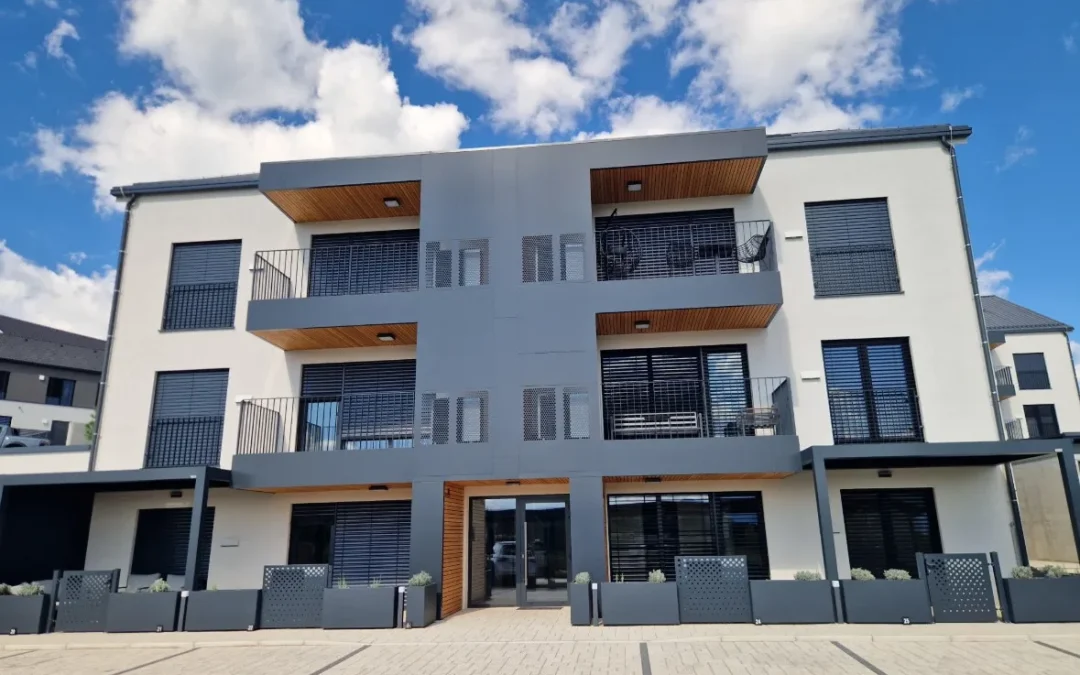
architecture – façades, fences, canopies, protective screens and shading systems
mechanical engineering – protective covers, safety screens and structural components
ventilation and filtration – air vents, filters and ventilation units
furniture industry – decorative panels and modern interior design elements
technical applications where strength, airflow or weight reduction are essential.
Its key advantage lies in the combination of functionality and visual appeal, which allows it to be perfectly adapted to both industrial and architectural applications.
Which materials do we perforate?
At Flamula Metal, we produce perforations in a variety of metals, including:
- galvanized steel,
- aluminium,
- stainless steel (inox),
- mild steel (DC01 or hot-rolled),
- copper and brass.
Each material has its own specific properties — from light weight and corrosion resistance to exceptional strength — allowing us to offer products that are precisely tailored to the customer’s end application.
Thicknesses and dimensions supported by our machinery
Our advanced CNC equipment enables sheet metal perforation:
thicknesses from 0.5 mm to 6 mm,
This means that we process small structural components with the same level of precision as large architectural panels commonly seen on commercial buildings, public facilities and modern shopping centres.
Different types of perforations – from standard to fully custom designs
The most common types of perforations include:
- round holes,
- square and rectangular perforations,
- hexagonal patterns,
- elongated slots,
- custom patterns based on CAD documentation.
For architects and industrial designers, we often create fully bespoke patterns that serve as a key visual element of the project or as a technical solution where functional parameters must be precisely defined.
How does advanced technology ensure quality?
At Flamula Metal, CNC perforation machines enable:
- extremely precise tool positioning,
- high processing speed,
- minimal material deformation,
- perfect pattern repeatability,
- cost-efficient production of both small and large batches.
Advanced technology allows us to respond quickly and flexibly, even when handling more demanding projects or tight production deadlines.
Why choose perforated sheet metal?
Perforated metal is not only visually appealing – it also offers numerous practical advantages:
- reduces the weight of structures,
- allows excellent airflow,
- provides good mechanical stability,
- enhances the aesthetic appearance of a space or structure,
- enables sound absorption,
- provides protection for machinery and equipment.
Due to its wide range of applications, it is one of the most sought-after solutions in both technical and architectural projects.